


How Digital Repression Reshapes Authoritarianism
Introduction
Since the early 21st century, global democratization has slowed. More countries now lean toward authoritarianism. Studying this trend is an important research field, as understanding authoritarianism is crucial to securing democracy.
The definition of authoritarianism is complex. Glasius (2018) notes that the classical view, which focuses on fair and regular elections, and the authoritarian personality theory, are too simplistic for today. Instead, he suggests focusing on authoritarian and illiberal practices. Classical political science also links authoritarianism to direct government actions, such as violent repression, election fraud, co-opting civil society, persecution of dissent, and buying support. While these tactics remain common among non-democratic leaders, digitalization has significantly changed the landscape.
Widespread internet access was supposed to make people better informed and create greater accountability. These trends are evident in many cases. However, non-democratic rulers have adapted to this new reality. Paradoxically, the very communication tools originally intended to destroy authoritarian rule are now used as weapons in their hands (Turner 2019).
This includes combining new technology with autocrats' usual tactics. Repression is often seen as a classic means of controlling populations in non-democratic regimes (Escribà-Folch, 2013). Escribà-Folch (2013) notes that repression is not limited to physical violence; other forms exist. This idea introduces a relatively new category: digital repression.
This tool of authoritarian resilience offers many advantages for authoritarian leaders or aspirants. It is usually cheaper than other forms of public control. If performed well, it is hard to punish or may go unnoticed. Some digital manipulations are not necessarily illegal (Cheeseman & Klaas, 2018). That is where the greatest danger for democracy hides.
The borders between authoritarian and democratic regimes are often blurred (Diamond, Linz, Lipset, 1988). This led to new terms such as "competitive authoritarianism" and "hybrid regime." Feldstein (2021) says these regimes occupy a grey zone between complete authoritarianism and partial democracy. Hard-to-trace digital repression complicates this framework, making it harder to identify authoritarianism.

Theoretical framework
As mentioned before, the definition of authoritarianism has been controversial within academia. Earlier works on authoritarianism include Linz’s book “Totalitarian and authoritarian regimes” (1975). In this work, he attempted to develop an understanding of this term by defining democracy and then focusing on the parts that would not be consistent with it. He describes a democratic political system as “...it allows the free formation of political preferences, through the use of basic freedom of association, information and communication, for the purpose of free competition between leaders…”.
Glasius’s proposal to focus on authoritarian and illiberal practices, rather than just regimes, aligns with the challenges posed by digital repression. It also includes democratic backsliding within the authoritarian category. This approach is beneficial, as authoritarian and illiberal practices are not always easy to trace or clearly identify early in the digital sphere. It enables deeper analysis of hybrid regimes—governments that have some non-democratic tendencies but are not fully autocratic.
Glasius defines authoritarian practices as “…patterns of action that sabotage accountability to people over whom a political actor exerts control, or their representatives, by means of secrecy, disinformation and disabling voice.” Illiberal practices are described as “patterned and organized infringements of individual autonomy and dignity.”
Does digital repression fall under those categories? Yes, but it depends on how you define it. Feldstein (2021) highlights various digital tools autocrats use to stay in power. This makes the definition complex, and, depending on context, digital repression could fall under either category.
According to Earl, Maher, and Pan (2022), the definition of digital repression includes: 1) the use of classical repression towards the internet opposition; 2) the use of digital instruments in order to repress; 3) the creation and implementation of information campaigns to reduce dissent. The third dimension allows us to focus on the hard-tracing strategies that could be beneficial for the hybrid regimes, and proposes a slightly new tool of repression, rather than just an extension of the classical ones, therefore will be central for the further research.
Digital repression in the Philippines
The presidency of Rodrigo Duterte is a good case study of democratic backsliding through digital repression, as his authoritarian practices were closely tied to online platforms.
Duterte came to power in 2016. Those elections are often called “social media elections” (Sinpeng, Gueorguiev, & Arugay, 2020). This concept is implied by the importance of social media for voter engagement. Paradoxically, people’s mobilization through social media is an important feature of Duterte’s non-democratic strategies.
There are speculations on the role of manipulations, bots, and foreign interference in Duterte’s win in the elections. It is, however, wrong to deprecate the role of real electoral support, and the social media support mobilization should rather be attributed to it (Sinpeng, Gueorguiev, & Arugay, 2020). The vote for Duterte was considered a “protest vote” against the ruling elite of the Philippines (Capsile, p.179). Nevertheless, it is important to note that the democratically elected leader would later resort to digital repression.
The pro-Duterte movement on social media was driven by Filipino celebrities and influencers who praised the leader on their pages, as well as a "keyboard army" of trolls who supported these posts (Fernan, 2020).
Duterte's “war on drugs” illustrates this at best. The campaign led to the death of thousands accused of using or selling drugs (Amnesty International). It not only lacked broad condemnation but also received noticeable support and help from the people. Some social media users attacked critics or the accused for breaking the law, infringing human dignity, or endangering safety. According to Glasius’s framework, this behavior could be seen as illiberal.
Some scholars believe that disinformation campaigns on Duterte’s behalf largely sustained public support. For example, claims spread that Pope Francis supported the government's war on drugs. This gave some justification to the country's Catholic majority, though it was not factual (Gauchan, M Hasanah & NK Jaiwong, 2019).
Glasius’s authoritarian and illiberal practices in this case are being challenged. The “sabotage of accountability by means of … disabling voice” could be applied to dissent. However, the tactic of the “keyboard army” actually encourages the population to engage, turning people into a tool for authoritarian resilience. Moreover, this makes people engage in illiberal activities themselves on behalf of the leader, creating a new tool for authoritarian resilience: participatory repression. This term refers to the participation of regular citizens in suppressing dissent.
One can argue that digital authoritarian practices are hard to trace, but in the case of Duterte’s manipulations of the public in the Philippines, this concern is brought to a new level. If society is transformed to the extent that it accepts authoritarian and illiberal practices and the majority truly supports it, and silences the opposition itself, wouldn’t that be a democratic choice of the majority? In that case, the label "autocracy", or even “authoritarian practices”, could be questioned by the country's society.

Digital repression in Hungary
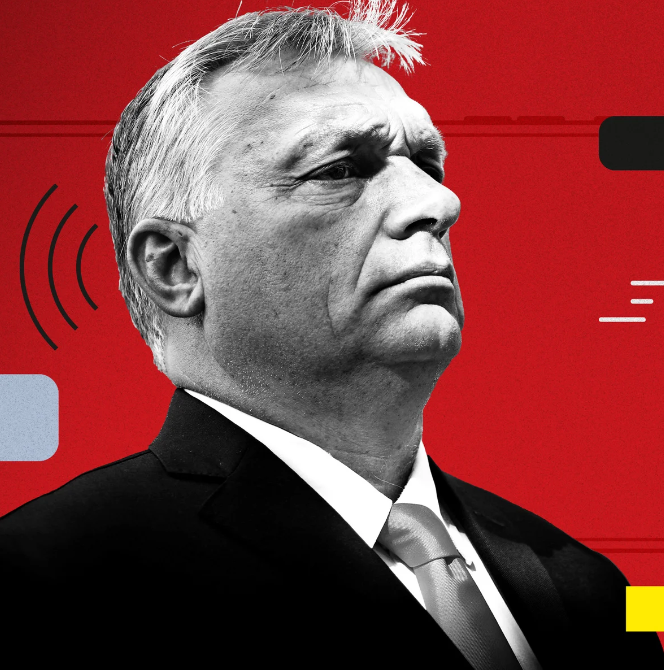
Victor Orban, a democratically elected leader similar to Rodrigo Duterte, came to power in Hungary in 2010 and, at the beginning of his political career, was closely associated with Hungarian liberal politics. However, the literature widely describes that during his premiership, Hungary began to experience significant democratic backsliding, with weakening of democratic checks and balances and the silencing of dissent (Polyák, Urbán, Szávai, Horváth, 2024). This case differs institutionally from the Philippines' case in the Global South, since Hungary has remained part of the European Union. Therefore, Hungary's case is particularly interesting for its “balance between commitments to the EU, national interest, and regime values” (Metodieva, 2025).
Some scholars note that digital repression, as a tool of authoritarian resilience, is being used by Viktor Orbán through various strategies; two of them is going to be analyzed futher through the framework of Glasius’s authoritarian and illiberal practices.
First, the informational campaigns. Their purpose is to put the supporters of his party, called Fidesz, and the opposition as far apart as possible, to create very emotionally driven support among voters (Polyák, Urbán, Szávai, Horváth, 2024).
Peter Kreko, in his article on illiberal informational autocracy in Europe (2022), explains how the successful informational campaign during the 2022 elections contributed to Viktor Orbán's victory. Right before the Hungarian elections, Russia invaded Ukraine, and the close ties of Orban’s administration with the Kremlin would be assumed to not be the most helpful right before the elections; however the informational campaign was able to convince people to vote for the Fidesz party through the following messages regarding opposition: 1) it will bring Hungary into war, and civilians would be brought to the frontline; 2) the era of the cheap gas will be over; 3) the opposition is conspired with the Ukrainian president Zelenskyy, and his cabinet is interfering in elections; 4) it will expose kids to dangerous surgeries related to changing sex. These facts were widely criticized as lacking credible evidence.
This strategy of “throwing mud at opposition” allows the current government to portray both sides as equally bad (Cheeseman & Klaas, 2018), or, in the given case, even worse. This infringes human dignity and could therefore be classified as an illiberal practice. The great danger for democracy here is that this method does not represent rigging elections in the traditional way, and is very hard to expose to the public by an opposition that traditionally has fewer resources than the current government (Cheeseman & Klaas, 2018), which is why “the free competition between leaders” highlighted by Linz is endangered.
Second, support of other autocrats. Today, states are no longer informationally separated from each other (Jones, 2023), enabling disinformation campaigns and troll armies to cross borders. Moreover, since developing digital authoritarian practices requires resources, most of the authoritarian countries have to rely on the big powers (Vörös, Imran, 2023).
In the case of Hungary, Reisher traced the influence of the Russian New Warfare Strategy, which includes disinformation campaigns as a tool. This results not only in, for instance, adaptation similar to the Russian centralized information environment, but also in allowing Russian media and trolls to spread information campaigns, such as presenting Russian values as an alternative to EU values through topics like Christianity, immigration, and conservatism.
Conclusion
Few findings could be drawn from the given research.
Duterte’s regime managed to transform the actors in performing authoritarian and illiberal practices. In this case, society not only accepted repression but rather became a tool of it by active participation. Moreover, the classical understanding of democracy as a “will of the majority” is being challenged, as the majority may favour non-democratic tendencies.
In addition to that, digital authoritarianism suggests a new form of election fraud that does not require traditional rigging. The disinformation campaigns in Hungary, while being an implication of authoritarian and illiberal practices, led to the democratic election of Viktor Orbán.
Moreover, digital repression internationalizes authoritarianism and allows for authoritarian practices to travel across the border, as is evident in Russian influence in Hungary. Authoritarianism is no longer confined to a single country; autocrats borrow tools from one another.
Digital repression enables authoritarian resilience within democratically elected governments. This raises a concern about the future of democracy, since the difference between manipulation and real support of the public becomes blurred with the new tactics of digital repression used, allowing for a smoother regime transition.
Bibliography
Ambay III, N., Gauchan, M., Hasanah, M. and Jaiwong, N.K. (2019) ‘Dystopia is now: Digital authoritarianism and human rights in Asia’, Global Campus Human Rights Journal, 3, pp. 269–285. Available at: http://dx.doi.org/10.25330/478
Amnesty International (n.d.) The Philippines ‘war on drugs’. Available at: https://www.amnesty.org/en/projects/the-philippines-war-on-drugs/
Casiple, R.C. (2016) ‘The Duterte presidency as a phenomenon’, Contemporary Southeast Asia, 38(2), pp. 179–184. Available at: https://www.jstor.org/stable/24916625
Cheeseman, N. and Klaas, B. (2018) How to rig an election. New Haven, CT: Yale University Press.
Diamond, L., Linz, J.J. and Lipset, S.M. (1988) Democracy in developing countries: Latin America. Boulder, CO: Lynne Rienner.
Earl, J., Maher, T.V. and Pan, J. (2022) ‘The digital repression of social movements, protest, and activism: A synthetic review’, Social Science Research, 106, 102784.
Escribà-Folch, A. (2013) ‘Repression, political threats, and survival under autocracy’, International Political Science Review, 34(5), pp. 543–560.
Feldstein, S. (2021) The rise of digital repression: How technology is reshaping power, politics, and resistance. New York: Oxford University Press.
Glasius, M. (2018) ‘What authoritarianism is … and is not: A practice perspective’, International Affairs, 94(3), pp. 515–533.
Jones, M.O. (2023) Digital authoritarianism in the Middle East: Deception, disinformation and social media. London: Hurst & Company. Available at: https://ebookcentral.proquest.com/lib/ed/detail.action?docID=7030358
Krekó, P. (2022) ‘The birth of an illiberal informational autocracy in Europe: A case study on Hungary’, Journal of Illiberalism Studies, 2(1), pp. 55–72.
Linz, J.J. (2000) Totalitarian and authoritarian regimes. Boulder, CO: Lynne Rienner.
Metodieva, A. (2025) ‘Digital sovereignty contested: Hungary’s strategic use of EU platform regulations’, Journal of Contemporary European Studies. Available at: https://doi.org/10.1080/14782804.2025.2543345
Polyák, G., Urbán, Á., Szávai, P. and Horváth, K. (2024) ‘Disinformation under the guise of democracy: Lessons from Hungary’, in State-sponsored disinformation around the globe. 1st edn. London: Routledge.
Pulse Asia Research Inc. (2017) September 2017 nationwide survey on the campaign against illegal drugs. Available at: https://pulseasia.ph/pulse-asia-73-of-filipinos-believe-there-are-ejks-88-support-war-on-drugs/
Reuters (2024) Supporters of former Philippine President Duterte rally outside ICC in The Hague. Available at: https://www.reutersconnect.com/item/supporters-of-former-philippine-president-duterte-rally-outside-icc-in-the-hague/dGFnOnJldXRlcnMuY29tLDIwMjY6bmV3c21sX01UMU5VUlBITzAwMFQyMVdXSg
Reisher, J. (2022) ‘The effect of disinformation on democracy: The impact of Hungary’s democratic decline’, CES Working Papers, 14(1), pp. 42–68.
Talamayan, F. (2020) ‘Policing cyberspace: Understanding online repression in Thailand and the Philippines’, Journal of ASEAN Studies, 8(2), pp. 129–145. https://doi.org/10.21512/jas.v8i2.6769
Turner, F. (2019) ‘The rise of the internet and a new age of authoritarianism’, Harper’s Magazine, 29, pp. 25–33.
Vörös, Z. and Imran, K. (2023) ‘Four models of digital authoritarian practices’, in Geopolitical perspectives and technological challenges for sustainable growth in the 21st century, p. 681.


Comments